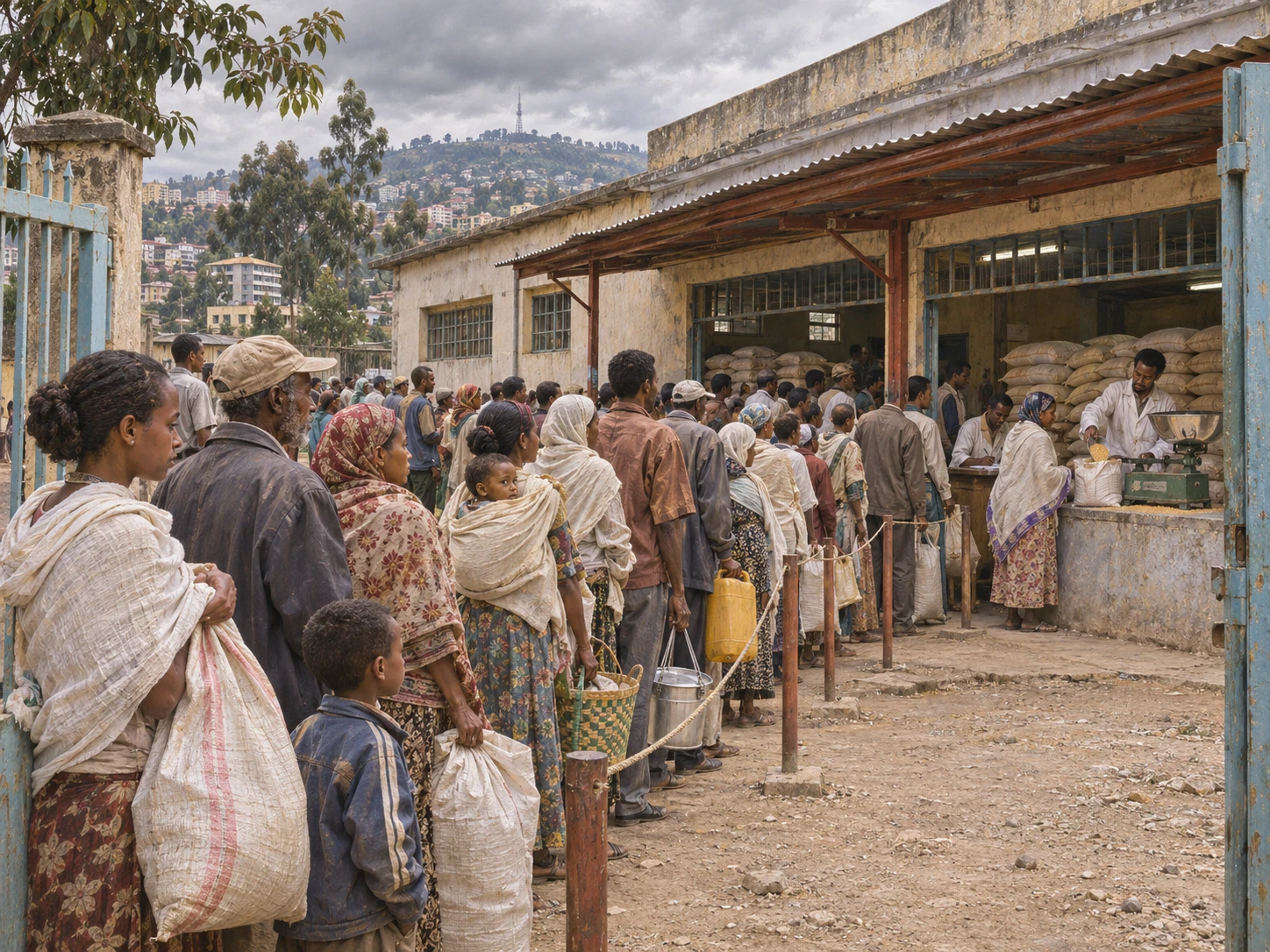
In April 2008, low-income residents of Addis Ababa, Ethiopia, queued at a state-owned grain centre to buy wheat. IRIN, now The New Humanitarian, recorded a woman who arrived thirty minutes before opening and waited three hours to make her purchase. A dated photograph also shows the physical queue outside the centre.
As global food prices rose, the government sold subsidized wheat to lower-income households. Customers returned at intervals to secure a staple for their families. One woman's concern about disorder in the line shows both sides of the programme: it made food more affordable, but obtaining that support still demanded time and physical endurance.