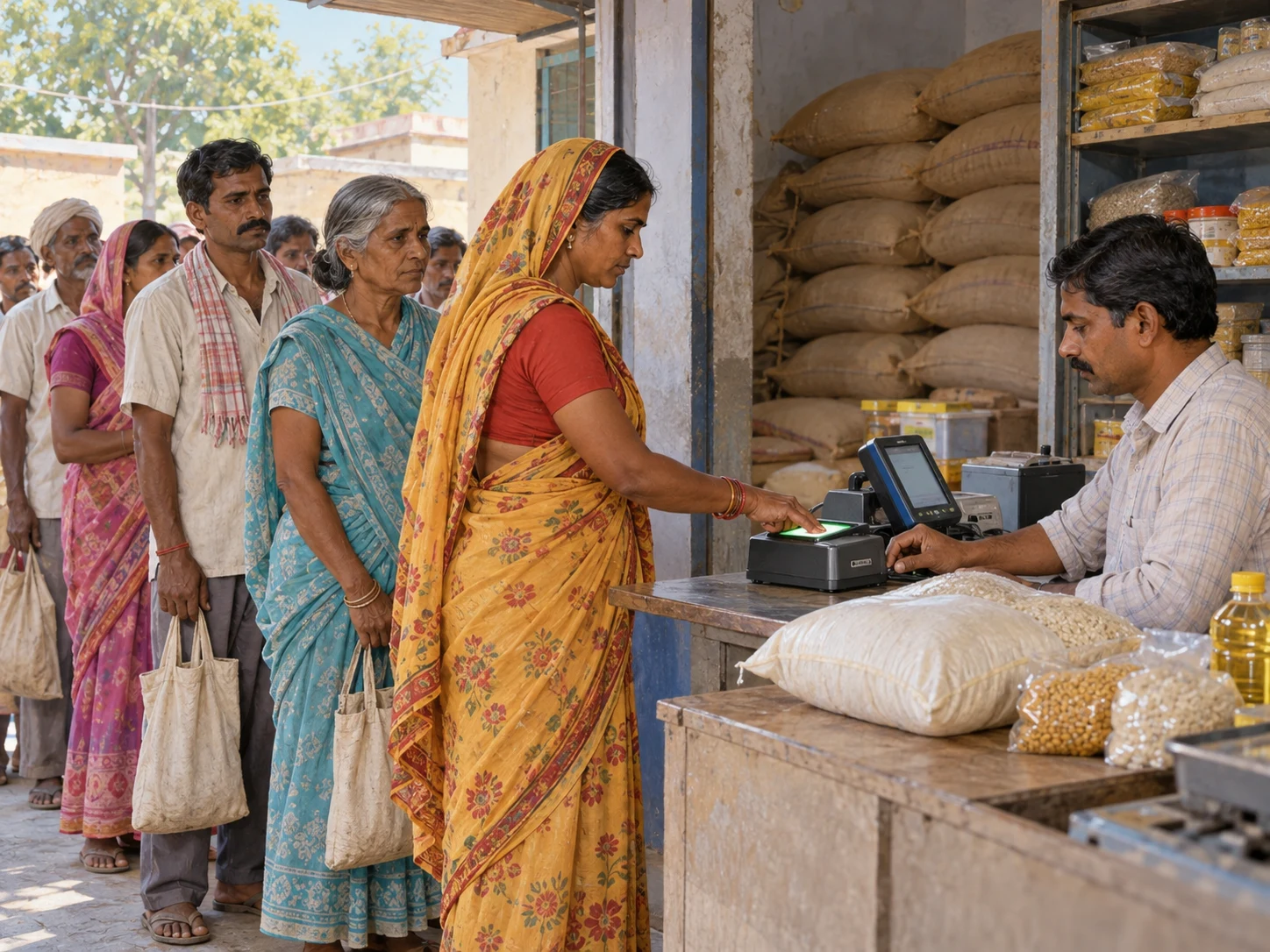
At a ration shop in Jharkhand, eastern India, about fifty people waited for subsidised food in 2016. An electronic point-of-sale machine matched each recipient’s fingerprint with an Aadhaar identity number. A weak connection or a fingerprint worn by manual work could stop the process. Reporting found shops where only about ten people had been served by the afternoon.
A paper ration card could be inspected by a person. Biometric authentication was introduced to reduce fraud, but a failed scan could send someone to the side for another attempt while later arrivals moved ahead. The queue acquired a second order: not who arrived first, but whose body the machine could recognise.
Technology is often expected to shorten lines. A strict proof-of-identity system can instead turn an unrecognised body into an exception. Being entitled to food and being readable as entitled were no longer the same thing. The distance between them became a new kind of waiting.
A failed fingerprint did not simply send a customer to the back. It left the person beside a flow that admitted only those the terminal could recognise. Between entitlement to grain and receipt of grain, the machine created another order of access.