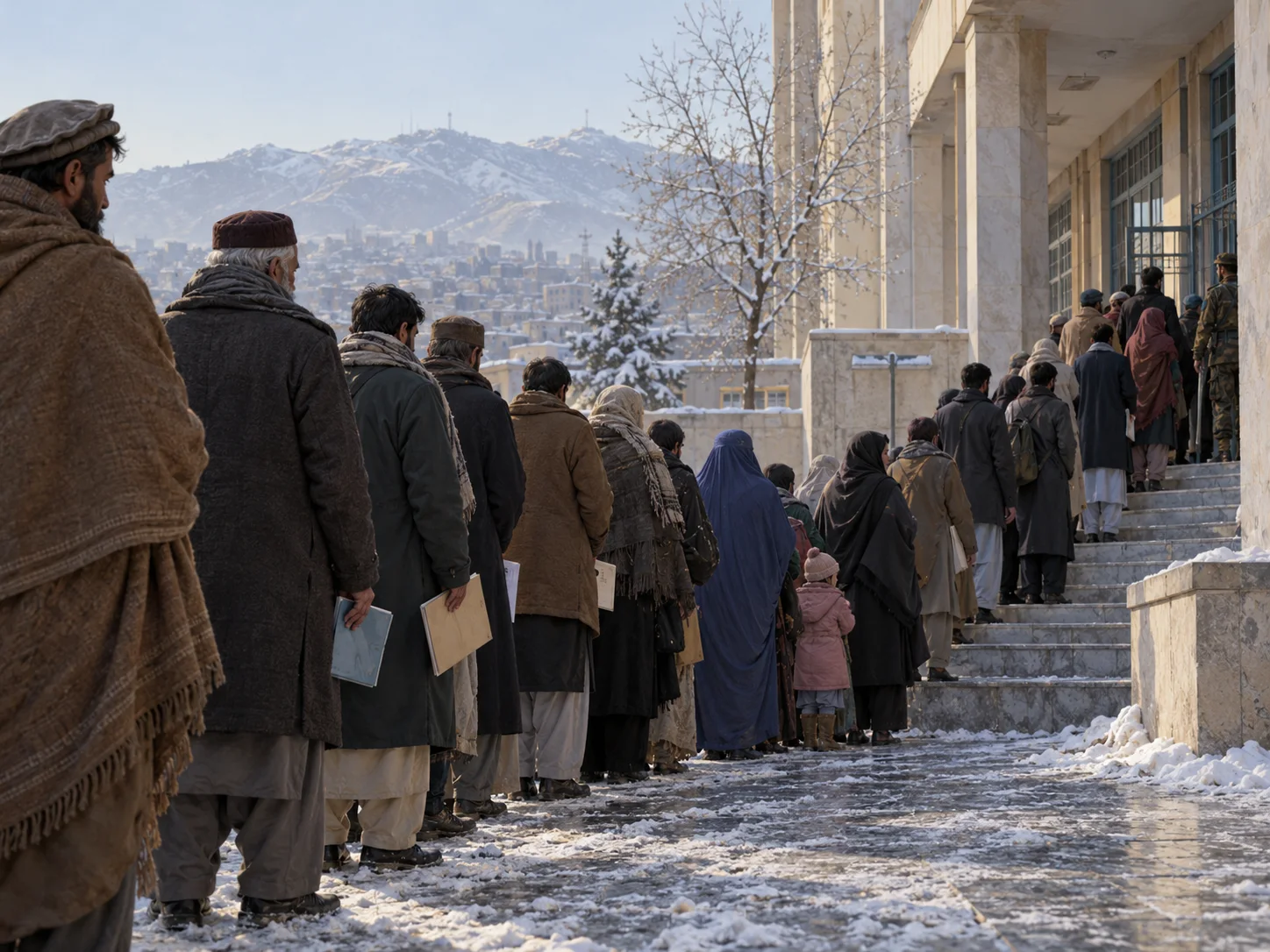
On 19 December 2021, a day after Kabul’s passport office announced that it would resume issuing travel documents, hundreds of people queued in sub-zero temperatures. Many had begun waiting the previous night, and most stood patiently in single file. Some hoped to travel abroad for medical treatment; others wanted the option to leave as insecurity and economic hardship deepened.
The procedure required applicants to be present, turning administration into a physical burden even for the ill. Ambulances carrying patients who were too sick to stand waited beside the road. A passport was a document, but in Kabul it could also represent access to treatment, safety, and movement. The cold single-file queue made the order of access to those possibilities visible.