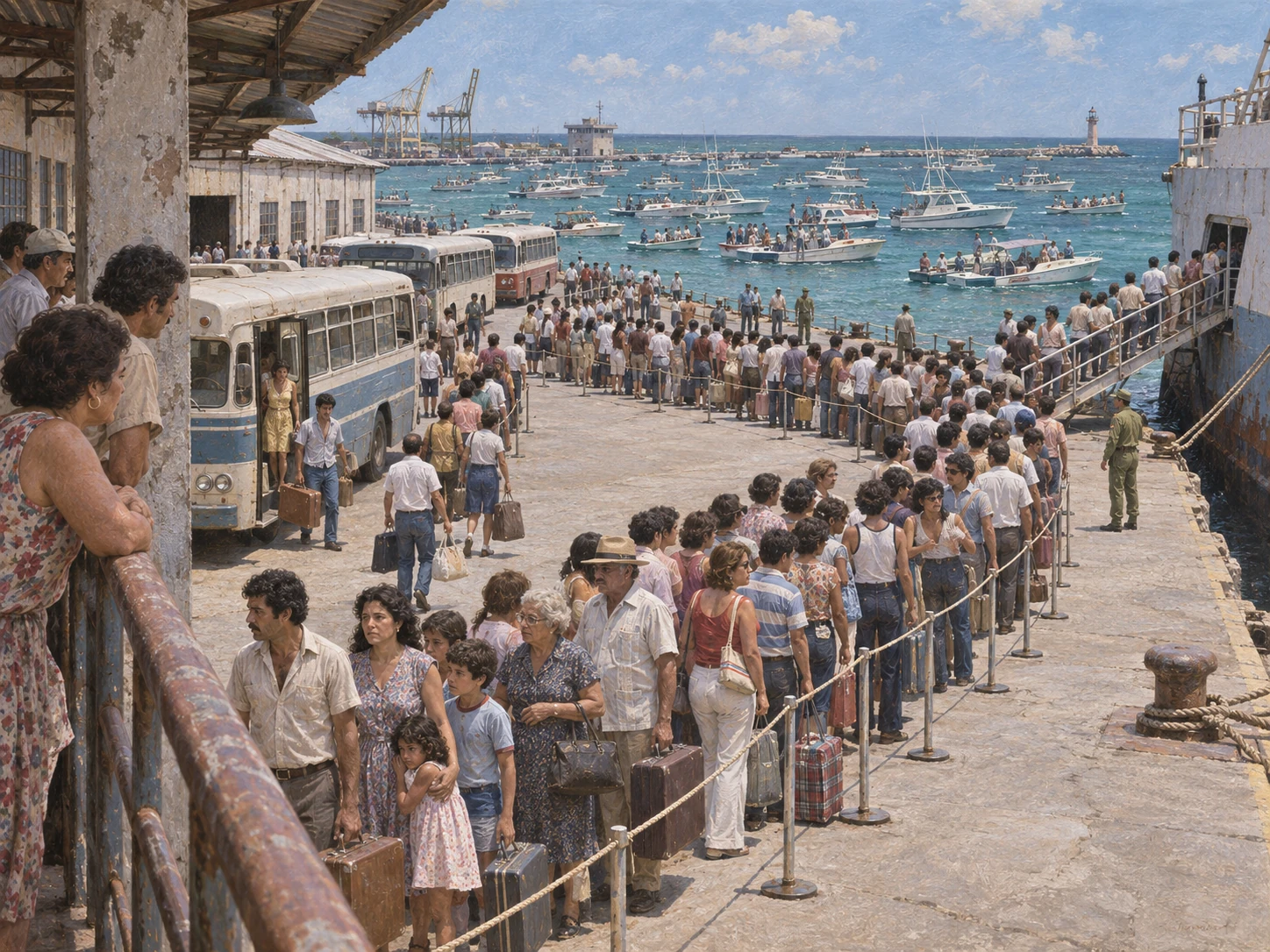
In April 1980, more than 1,300 boats from the United States gathered in Cuba's Mariel harbour, waiting to collect relatives and acquaintances. Contemporary reporting by the Washington Post said the wait reached three days, prompting the opening of accommodation for crews near the port. Buses carrying people approved to leave continued arriving.
The boats were not the only ones waiting. Later testimony records prospective exiles spending days in a holding site, while thousands at the port waited to board. Vessels arriving for family members, authorities deciding who would embark, and people trying to leave the country formed three intersecting streams of ordered delay inside one harbour.
What distinguishes this wait is that both ends of the line were families separated by sea. The Mariel boatlift cannot be reduced to a hopeful reunion story: it involved state selection and humiliation, overcrowding and a dangerous crossing. Yet waiting in the harbour was also a concrete period in which people divided by borders tried to move toward one another.